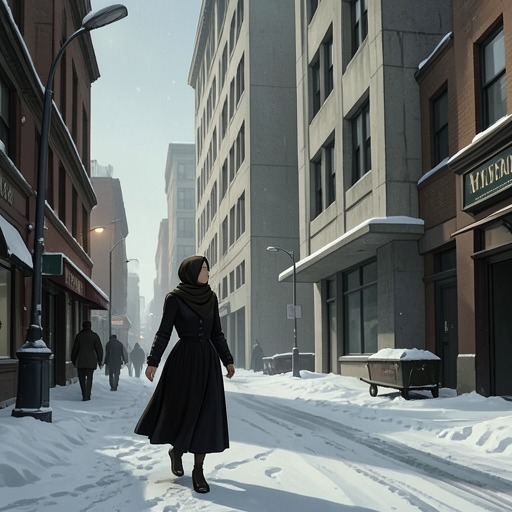
Clare’s childhood in Chicago
Clare’s precarious childhood
[Clare Kendry](entity:character-recall-character-clare-kendry-8214b5dcb8f1) grows up in poverty with her father, [Bob Kendry](entity:character-recall-character-bob-kendry-cf418033b24e), a drunken janitor whose rages make their shabby home feel unsafe. Even as a child, she seems less cowed by danger than intent on getting what she wants.
During Clare’s childhood
The red Sunday dress
Clare takes part of her weekly wages to buy bright red cloth for a dress she wants to wear to a Sunday-school picnic. The theft risks punishment, but her desire outweighs the danger, establishing the bold, acquisitive nature that Irene later calls her “having way.”
When Clare is about fifteen
Bob Kendry’s death
[Bob Kendry](entity:character-recall-character-bob-kendry-cf418033b24e) is killed in a saloon fight. Clare first stares at his body with apparent disdain, then breaks into a sudden, violent storm of grief or fury before leaving the room.
After Bob Kendry’s death
The aunts’ household
White relatives take Clare in, giving her shelter while requiring her to do the housework and washing. Their religious explanations for her labor expose the racial prejudice beneath their piety, and they discourage her from speaking about her Black connections.
As a teenager, after moving in with her aunts
Clare chooses to pass
Determined to escape dependence and obtain the life she wants, Clare recognizes that her appearance allows her to pass as white. The aunts’ silence about her ancestry and the wider family history leave her with a plausible route into white society.
At eighteen
Clare marries John Bellew
[John Bellew](entity:character-recall-character-john-bellew-907b66cdf6d3) returns from South America wealthy and takes an interest in Clare, whose relatives cannot or do not reveal her Black ancestry. Clare arranges to marry him without telling him she is Black, securing the social position she has long wanted while binding her future to a dangerous secret.
After Clare’s marriage
Clare disappears from Chicago
Clare stops visiting her old friends and relatives, while rumors place her in fashionable white settings with wealthy company. Irene and the other girls suspect that Clare has crossed the color line, but they have no direct confirmation and eventually let her pass out of their thoughts.
Early in Irene and Brian’s marriage
Irene’s earlier restraint of Brian
Brian longs to leave the [United States](entity:location-recall-location-united-states-2f533bc8d0b9) for [Brazil](entity:location-recall-location-brazil-c5c26642be39), where he imagines that race will matter less, but Irene opposes the plan. She insists that his medical career and their family belong in [New York City](entity:location-recall-location-7a11f2949ca3), and their quarrel leaves his wish alive beneath the household’s settled surface.
A hot August day, about two years before the novel’s present
Irene enters the Drayton
While visiting [Chicago](entity:location-recall-location-chicago-eb77a855d5aa), [Irene Redfield](entity:character-recall-character-irene-redfield-6418d426bd57) grows faint in the heat and accepts a cabdriver’s suggestion that she cool off at the Drayton Hotel rooftop tearoom. In the hotel’s fashionable, whites-only room, she is passing for white for convenience and fears that a stranger’s attention may expose her.
That August afternoon
The stare across the tearoom
A beautiful woman at the next table studies Irene so intently that Irene wonders whether she has been recognized as Black. The woman approaches and addresses her by her old name, ’Rene, revealing herself as [Clare Kendry](entity:character-recall-character-clare-kendry-8214b5dcb8f1).
During their Drayton reunion
The friends recover twelve years
Irene and Clare exchange news after years apart, with Irene recounting marriages, births, deaths, and family changes while Clare listens eagerly. Irene avoids asking directly about Clare’s life, caught between curiosity and fear that the old rumors were true.
Later in the Drayton reunion
The invitation to Idlewild
Clare invites Irene to dinner and presses for another meeting, while Irene struggles to decline without seeming cruel. Irene impulsively offers to take Clare to Idlewild, then regrets exposing herself to gossip and scrutiny; Clare refuses, acknowledging what her presence would mean for Irene.
Still at the Drayton Hotel
Clare explains her escape
Clare describes the harsh life with her aunts and her resolve to become a person rather than a charity case or a racial problem. She says she used her ability to pass, married [John Bellew](entity:character-recall-character-john-bellew-907b66cdf6d3) without disclosing her ancestry, and pursued the wealth and freedom she had wanted.
Near the end of the Drayton reunion
The price of passing
Irene says she has never wanted to pass, claiming that she already has nearly everything she needs. Clare answers that money and status may be worth the price, while Irene feels both moral resistance and an unwilling fascination with Clare’s successful transgression.
At the end of the Drayton meeting
Clare asks about Irene’s life
Clare urges Irene to meet again, and Irene finds herself hoping that their farewell will not be final. Their warmth unsettles Irene, who leaves angry at herself for being flattered by Clare’s attention and wonders why Clare omitted her married name.
The following Tuesday, in Chicago
Irene avoids Clare’s call
Irene initially refuses repeated telephone calls from Clare, telling the household servant to say she is unavailable. The persistence and the servant’s reproachful look wear down her resistance, and Irene agrees to visit Clare at [The Morgan](entity:location-recall-location-61400fa16db9).
Tuesday afternoon at The Morgan
Gertrude joins the tea
At Clare’s hotel, Irene finds [Gertrude Martin](entity:character-recall-character-gertrude-martin-b20686f72aa8) already there. Gertrude has married a white man who knew her ancestry, but her anxious manner and appearance sharpen Irene’s sense that the women have made different compromises with race and class.
During the tea at The Morgan
Fear of a dark child
The women discuss their children, and Clare admits that she feared her daughter Margery might be dark and does not want another child. Gertrude shares that fear, speaking as if a dark child would be an unbearable misfortune; Irene quietly reveals that one of her sons is dark.
During the tea at The Morgan
The conversation turns on identity
Gertrude recounts that a former acquaintance has become a Black Jew, and Clare laughs at the story as a peculiar form of self-reinvention. Irene challenges the assumption that such a change must be insincere, exposing her own discomfort with the women’s easy judgments about identity and allegiance.
Later that afternoon at The Morgan
John Bellew arrives
[John Bellew](entity:character-recall-character-john-bellew-907b66cdf6d3) enters and greets Clare with the pet name “Nig,” joking that she is growing darker in the sun. Irene initially wonders whether he knows Clare’s ancestry, then realizes from his explanation that he believes his wife is white.
During the same tea
Bellew’s racist outburst
Bellew says that he hates Black people and describes them with vicious slurs, unaware that he is speaking among three Black women. Clare tries to quiet him, and Irene suppresses her anger to avoid endangering Clare’s secret; she conceals her own identity from him as well.
After Bellew’s remarks
The women leave The Morgan
Irene departs with Gertrude, unable to offer Bellew the polite farewell Gertrude manages. Outside, Gertrude calls Clare’s situation dangerously reckless, while Irene admits that Clare has obtained what she wanted and that the exposure risk is real.
The morning after the Chicago tea
Clare’s letter on the train
As Irene travels east, she reads Clare’s apology and her admission that she is no longer sure her chosen life is the wiser one. Irene tears the letter into scraps and scatters them from the train, resolving to reject Clare if they ever meet again.
October, about two years after the Chicago encounter
The second letter arrives
Back in [New York City](entity:location-recall-location-7a11f2949ca3), Irene receives another letter from Clare asking to see her. The letter revives Irene’s anger at the humiliation at [The Morgan](entity:location-recall-location-61400fa16db9), but also forces her to confront the fact that she had hidden her race and failed to defend Black people in Bellew’s presence.
The morning Irene reads Clare’s letter
Brian and Irene debate returners
Brian reads the letter and warns Irene not to let Clare draw her into trouble. He observes that people who pass often return to Black life, though he cannot explain why; when Irene asks what race is, he answers that understanding the return would tell him.
That morning at breakfast
The argument over race duty
Irene says she will not serve as the link between Clare and [Harlem](entity:location-recall-location-792a51fee13c), yet admits that Black people disapprove of passing while also protecting those who do it. Brian offers a biological explanation for this contradiction, which Irene rejects as too simple to explain the force of race and loyalty.
That morning, after breakfast
Brian’s discontent resurfaces
Brian complains about the demands and indignities of his medical work, and Irene recognizes the old dissatisfaction that once made him want to leave the country. She fears losing the orderly life she has built and begins looking for a way to redirect his attention.
Later that morning
Irene’s diversion fails
In the car, Irene tries to shift the conversation toward their son’s schooling and proposes sending him to a European school with Brian as escort. Brian sees through the diversion, objects to Irene’s protection of the boys from sex, and leaves her behind at the printing shop after their quarrel.
Five days after the letter arrives
Irene refuses to answer Clare
Irene discovers that Clare has asked her to send any reply to general delivery, a precaution that Irene takes as an insult to her judgment and discretion. She tears the letter and decides that silence will end the matter, though she knows Clare may ignore the refusal.
A cold October evening, several days later
Clare comes to Irene’s home
Clare arrives in [Harlem](entity:location-recall-location-792a51fee13c) after waiting for a reply that never came. Irene intends to dismiss her, but the sight of Clare and the old affection between them undo her prepared speech; she welcomes Clare with an outburst of admiration.
The following night
Clare attends the dance
Clare arrives at the Negro Welfare League dance in a striking black gown, drawing Irene’s admiration and self-consciousness. Brian is courteous to Clare, and Irene is uneasy that Clare’s beauty and confidence make her impossible to overlook.
During the dance
Irene and Hugh discuss passing
[Hugh Wentworth](entity:character-recall-character-hugh-wentworth-86ec03a91de0) asks Irene whether Clare is Black, and Irene says that appearance cannot reliably reveal who is passing. She describes an intuition that can mark racial kinship without a visible sign, leaving Hugh unable to master the supposed art of identifying passers.
Later that night
Clare dances with Brian
Irene sees Clare dancing with both Black and white men, often with Brian, while the crowd moves between racial and social categories. Near the end of the evening, Brian offers to take Clare home, but Irene arranges for Bianca Wentworth to do so instead.
The months after the dance
Clare becomes a regular visitor
Clare begins visiting the Redfield home often, making herself comfortable with the children and even the household staff. Irene resents the ease with which Clare enters every part of her domestic world, though she cannot bring herself to ask her to stop.
During Clare’s visits in Harlem
Brian tolerates Clare
Brian shows neither clear approval nor hostility toward Clare, and he denies that she is especially beautiful. Irene continues to watch their interactions, aware that Clare’s presence has become part of the household even as she unsettles its balance.
As spring approaches
Clare resists returning to Europe
Clare dreads leaving [New York City](entity:location-recall-location-7a11f2949ca3) for Europe, where she will rejoin Margery and resume life with Bellew. She tells Irene that children are not everything, then confesses that she would discard nearly anything to get what she wants and may not be safe to trust.
December, near Christmas
Irene’s winter unease
Irene grows depressed and increasingly unable to understand Brian’s withdrawn, watchful mood. She wonders whether his restlessness concerns [Brazil](entity:location-recall-location-brazil-c5c26642be39) or something else, but cannot identify what he is waiting for.
A December afternoon
Clare arrives uninvited
Irene wakes from a rare nap to learn that Clare is downstairs at a small gathering for Hugh. Irene had deliberately excluded her because Hugh dislikes her, but Brian admits that he invited Clare after seeing how hurt she was to be left out.
Just before the gathering
Irene suspects Brian and Clare
Brian’s apology and Irene’s own fierce reaction make her suspect that he and Clare are having an affair. She cannot yet name the suspicion clearly, but it makes her feel exposed and drives her to hide her distress before going downstairs.
During Hugh’s tea party
The broken cup
Irene moves through the party in a state of shock, watching Clare and Brian while guests continue their ordinary conversation. In a surge of rage, she drops and shatters a cup, an accidental break that becomes an outlet for the turmoil she is trying to conceal.
Immediately after the cup breaks
Irene disguises her distress
When Hugh apologizes, Irene tells him the cup was ugly and claims she had wanted an excuse to get rid of it. Her quick explanation preserves appearances, as she commits herself to bearing her private pain so long as nobody knows it is there.
After the tea party
Irene clings to uncertainty
Irene tries to convince herself that she has no proof of an affair and no reason to discard her trust in Brian. She turns to the children and Bellew as possible limits on what Clare and Brian could do, but the suspicion continues to disturb her.
During the Christmas season
Irene imagines exposing Clare
Clare is absent while Bellew is back in the city, but Irene feels that Clare remains mentally present. Wanting to be free of her, Irene briefly considers telling Bellew about Clare’s visits to [Harlem](entity:location-recall-location-792a51fee13c), then recoils from the act and from the damage it might cause.
The day after Irene considers exposing Clare
Bellew recognizes Irene
While shopping downtown with [Felise Freeland](entity:character-recall-character-felise-freeland-f23b52ced941), Irene collides with Bellew. His expression changes when he sees Felise beside her, and Irene believes he has understood that the women are Black; she refuses to acknowledge him and walks on.
That afternoon and evening
Irene conceals the encounter
Irene regrets not telling Bellew who Clare is, but also feels unable to separate her personal resentment from a bond of racial loyalty. She decides that she should warn Clare, yet doubts that a warning can change what Bellew already suspects.
That evening
Irene cannot tell Brian
Irene repeatedly approaches the moment of telling Brian about the encounter with Bellew but cannot make herself speak. The omission leaves her alone with her foreboding and prevents Brian from knowing that Clare may soon be exposed.
The next morning, during a snowstorm
Clare’s message from Bellew
Clare telephones to say she can attend a gathering at the Freelands’ that evening, explaining that Bellew has gone to Philadelphia. Irene receives the message with fear and hope, wondering whether Bellew has already confronted Clare and whether the threat to her own household might end.
That evening, before the party
Brian speaks of lynching
At dinner, Theodore asks why Black people are lynched, and Brian answers plainly that white people hate and fear them. Irene tries to stop the discussion, but Brian insists that their sons must understand the danger of the country in which they live; the argument lays bare their conflicting ideas of protection.
Later that evening
Clare arrives in red
Clare arrives for the Freeland gathering in a bright red gown, saying that Bellew has unexpectedly gone to Philadelphia. Irene almost tells her about seeing Bellew, but stops herself and asks instead whether Clare has considered what would happen if he discovered the truth.
During Irene’s dressing
Clare chooses Harlem
Clare says she has thought about discovery and would move to [Harlem](entity:location-recall-location-792a51fee13c) if her marriage ended, with only Margery holding her back. Irene hears the answer as a possible warning and realizes that she has withheld the encounter with Bellew partly because Clare’s freedom could threaten her marriage.
Before the journey to the Freeland party
Irene admits her fear
Irene acknowledges to herself that she believes Brian and Clare have crossed a line, though the text supplies no proof beyond her suspicions. She resolves to keep Brian and preserve the outer shell of their life together, and decides that neither he nor Clare must learn that Bellew may have recognized her.
On arriving at the Freeland apartment
The snowy walk upstairs
Brian jokes with Clare about walking up the stairs, and Irene watches Clare cling to his arm as they cross the snowy courtyard. She sees Brian looking at Clare with what seems to her like eager longing, reinforcing the suspicion she has tried to contain.
During the Freeland gathering
Irene watches from the party
The party begins in lively conversation, but Irene remains quiet and strained. She opens a window, finishes her cigarette, and watches the spark descend toward the snow before Dave leads her back into the room.
Later that evening
Bellew storms into the room
Bellew arrives at the Freelands’ and insists that his wife is there, pushing past the people who try to stop him. He strides toward Clare as the guests turn to watch, bringing the secret that has organized her life into the open.
At the climax of the Freeland party
Clare is exposed
Bellew calls Clare a Black woman in a furious accusation, and the room erupts as the guests move to restrain him. Clare stands by the window, apparently composed even as her marriage and carefully maintained white identity collapse before everyone.
Moments after Bellew’s accusation, at Christmas
Clare falls from the window
Irene rushes to Clare and lays a hand on her arm, thinking that Clare must not be cast off by Bellew and become free to claim Brian. In the confusion Clare goes over the window; the novel never establishes whether she falls, jumps, or is pushed.
Immediately after Clare’s fall
Irene returns to the room
While the others rush downstairs, Irene remains behind, stunned and staring at a print on the wall. She insists to herself that the fall was an accident, but cannot stop seeing her hand on Clare’s arm or wondering whether Clare is dead.
Minutes after the fall
Irene gives her account
Irene descends the stairs holding Brian’s coat and finds the guests gathered below. When an official asks whether Bellew pushed Clare, Irene denies it and says Clare fell before anyone could stop her, breaking off before she can finish her statement.
At the novel’s ending
The death remains unresolved
Irene collapses as she struggles with what happened, while a stranger concludes that Clare may have died by misadventure and goes to inspect the window. Irene’s memory does not provide a final answer, leaving her possible role in the fall as uncertain as Clare’s last movement.